
6 Questions to Ask Before Hiring a Roofer in Massachusetts (Avoid Costly Mistakes)

Updated: Sep 9

What Questions Should You Ask a Roofer in Massachusetts?
Most homeowners hire a roofer the same way they hire anyone else. They get a few names. They make a few calls. They pick the one that sounds the most professional — or the one that comes in closest to budget.
Then they hope for the best.
That's exactly how homeowners end up paying twice for the same roof. Here's the problem with that approach: in roofing, what you don't ask before the job starts almost always shows up after. A failed inspection nobody told you about. A ventilation problem that destroys the new roof in ten years. A sheathing charge that appears out of nowhere once your old roof is already in the dumpster.
The good news? The right questions separate the professionals from the pretenders every single time.
"Information is light — and it's free," says Brian Campanale, owner of Roof Roof New England Roofing and a 30-year Master Builder based right here in Westminster, MA. "Collect as much as you can — and pay attention to the company providing the proposal."
Here's exactly what to look for and ask.
Question 1: Did You Get on the Roof?

This sounds like a given. It isn't.
A surprising number of contractors or representatives will quote a roof replacement based on a ground-level walkthrough, a satellite image, a drone, or a quick glance from the driveway. They measure the square footage, estimate the materials, and send you a number — without ever setting foot on your roof.
That's not an inspection. That's a guess.
A professional roofer gets on the roof. Every time. They walk every section. They look at the condition of the shingles, the ridge cap, the flashing at every critical transition point — chimneys, skylights, valleys, dormers. They document what they find.
If the contractor you're talking to didn't physically get on your roof, their proposal is incomplete before it's even written.
Question 2: Did You Actually Inspect the Attic?

This is the question most homeowners never think to ask.
It's also the most important one on this list.
A roof is not just shingles. It's a complete system — and the attic is the engine room. What's happening inside that attic directly determines how long any roof above it will last.
Brian's team has inspected homes across Central Massachusetts — in Westminster, Gardner, Winchendon, Spencer, Princeton, Athol, and Billerica — where the shingles looked acceptable from the street, but the attic told a completely different story.
Dark staining on the sheathing. Blocked soffit vents. No functional ridge vent exhaust. Insulation pushed against the eaves, strangling airflow.
A roof installed over those conditions will fail early. Not because of the shingles. Not because of the weather. Because the attic was never addressed.
We see this constantly during real inspections across Central MA — especially in older homes where ventilation was never properly designed in the first place.
The three things every attic inspection needs to confirm:
Soffit intake ventilation — is cool outside air entering freely along the eaves, or is it blocked by insulation or improper installation?
Ridge vent exhaust — is warm, moist attic air escaping at the peak, or is it trapped with nowhere to go?
Insulation R-value — is the thermal barrier sufficient, and installed in a way that doesn’t choke off airflow at the eaves?
When all three are working together, your attic stays cold in winter — which means significantly less ice dam risk. It stays ventilated in summer — which means shingles don’t bake from the underside and lose years of life expectancy.
It’s not just about having ventilation — it’s about having balanced ventilation. Intake and exhaust have to work together as a system.
When any one of these is wrong, the clock on your new roof starts running faster than it should.If a contractor didn’t go into your attic, they don’t have the full picture. Period.
(We documented this exact issue in a recent Westminster inspection, where poor attic ventilation was quietly destroying the roof from the inside out.)
Question 3: Can You Show Me the Products You're Using — and Explain Why?
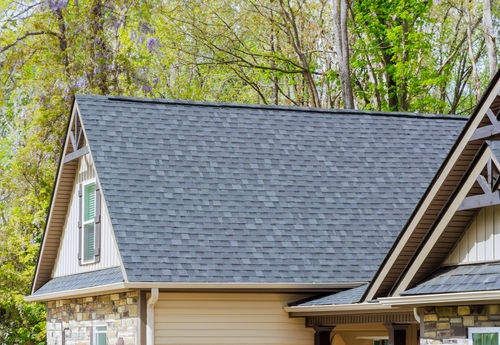
Every roofing system is only as strong as the materials that go into it.
Not all materials are equal — and not all contractors will be upfront about what they're actually installing.
Ask them to walk you through it:
What shingle brand and product line are they using?
What underlayment goes beneath the shingles?
What ice and water shield are they installing — and is it self-sealing?
What ridge vent system are they using, and how does it integrate with soffit ventilation?
A contractor who knows their products will answer these questions confidently and explain the purpose of each component. A contractor who's cutting corners will get vague — or change the subject entirely.
At Roof Roof New England, Brian's product of choice is Owens Corning. There are many good products out there, and many that work — but Owens Corning stands out when it comes to engineering and longevity. That's not brand loyalty for its own sake. It's 30 years of field experience watching what holds up on New England roofs and what doesn't.
Not sure if your current quote covers all of this? We're happy to review it with you and point out anything that might be missing — no pressure, no obligation. Sometimes, a second set of experienced eyes can save thousands down the road.
"The team took the time to explain every detail of the job and helped me understand some complex roofing issues that other companies either missed or couldn't explain clearly." — Verified Google Review
Question 4: Is the Plywood Sheathing Included in Your Proposal?
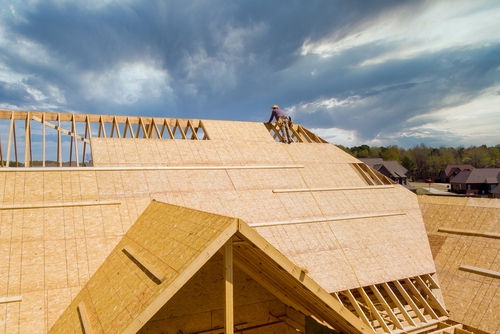
Write this one down.
Sheathing is the plywood deck your shingles are nailed to. It's the structural foundation of your entire roofing system. In older homes across Central Massachusetts — many built long before modern ventilation standards existed — sheathing damage from years of trapped moisture is extremely common.
Here's how the low-bid trap works: a contractor leaves the sheathing assessment out of the proposal entirely. The bid looks attractive. You sign. The crew shows up, tears off the old roof — and suddenly you're handed a change order for thousands of dollars in repairs, with your house wide open and no leverage to negotiate.
That's not an accident. That's a business model.
A thorough contractor assesses the sheathing condition during the inspection and includes everything in the proposal before the job starts. If partial replacement is likely, they tell you upfront. If a full overlay is necessary, it's in the number from day one.
No surprises once the nails start flying.
"They explained everything clearly, provided a fair and transparent quote, and completed the job on time as promised. The quality of workmanship really stands out." — Verified Google Review, Fitchburg Area
Question 5: How Are You Addressing the Ventilation System?
This question will separate the true professionals from everyone else faster than any other on this list.
Most contractors treat ventilation as an afterthought. They replace the shingles, install a ridge cap, and move on to the next job. The soffit vents, the baffles, the critical balance between intake and exhaust — none of it gets evaluated.
In New England, that's a costly mistake with very predictable consequences.
Our winters create conditions where a poorly ventilated attic becomes an ice dam factory. Warm air from the living space rises, passes through inadequate insulation, and heats the underside of the roof deck. Snow melts, runs down to the cold eaves, and refreezes — backing up under the shingles and into your home.
Our summers trap heat and humidity with nowhere to go, slowly cooking shingles from the underside and cutting years off their life expectancy.
The fix isn't complicated. It requires a contractor who actually looks for the problem in the first place.
Ask them directly: "How will the ventilation system be evaluated and corrected as part of this project?"
If they don't have a clear, confident answer — they're not looking at your roof as a system. They're looking at it as a shingle replacement job.
Question 6: Are There Any Conditions That Could Result in Additional Charges?
Ask this one last — and listen carefully to the answer.
A professional contractor will walk you through any scenarios that could affect the final cost: sheathing damage beyond what was visible during inspection, rotted fascia discovered during tear-off, and flashing conditions at complex transition points. They'll be specific, honest, and prepared — because they've done the inspection work that lets them anticipate these things.
A contractor operating on a low-bid model will be vague. Or they'll say "we don't anticipate any issues" without having done the inspection that would actually tell them one way or the other.
The goal isn't a contractor who guarantees zero variables — roofing is fieldwork, and surprises occasionally happen. The goal is a contractor who minimizes those variables through thorough inspection, then communicates transparently when something unexpected does arise.
Common Roofing Problems We Find Across Central Massachusetts
During inspections in Westminster, Gardner, Fitchburg, Leominster, Princeton, Spencer, Winchendon, and surrounding towns, we consistently find the same issues:
Poor attic ventilation leading to premature shingle failure
Ice dam damage caused by heat loss and inadequate airflow
Aging or moisture-damaged sheathing hidden beneath existing shingles
Moss and algae growth breaking down shingle integrity over time
These aren't rare edge cases. They're common — and they're exactly why a thorough roof inspection matters before any replacement project begins.
These aren’t rare cases — they’re common.
One recent Westminster home we inspected had years of life taken off the roof due to ventilation issues that were never addressed.
"From start to finish, the team was professional, reliable, and delivered top-quality roofing work. They showed up on time, kept everything clean, and made sure the job was done right." — Verified Google Review
The Contractor Who Can't Answer These Questions Is Already Telling You Something
Not with words. With silence.
A roofer who physically got on your roof, inspected your attic, understands their products inside and out, assessed your sheathing, and evaluated your ventilation system — that contractor answers every one of these questions without hesitation.
A contractor who skipped those steps won’t.
And that tells you everything you need to know.
These are the exact standards Brian holds every Roof Roof New England project to — every inspection, every proposal, every job.
"We cover everything we can and provide our clients the best roofing option for their home," Brian says. "We do the work upfront — before we put together our proposal — so we can educate our clients and minimize surprises. No hidden costs. No headaches. Just honest, professional service from people who take this work seriously."
Now you know the most important questions to ask a roofer in Massachusetts — and how to spot the difference between a real professional and a quick estimate.
Frequently Asked Questions
How many roofing bids should I get in Massachusetts? Two to three bids is a reasonable starting point — but don't evaluate them on price alone. Evaluate them on scope. Are all three proposals including the same inspections, the same materials, the same ventilation assessment? If not, you're not comparing apples to apples.
What if a contractor refuses to inspect the attic? That's a significant red flag. In New England, an attic inspection isn't optional — it's essential to understanding the full condition of your roofing system. A contractor unwilling to inspect the full system isn't prepared to take responsibility for it either.
Is the cheapest roofing bid always the wrong choice? Not always, but a significantly lower bid almost always means something was left out of the scope. Use these six questions to find out exactly what's missing before you sign anything.
Do you serve Gardner, Westminster, Spencer, Winchendon, and surrounding towns? Yes. Roof Roof New England Roofing proudly serves Westminster, Gardner, Princeton, Spencer, Athol, Winchendon, Billerica, Fitchburg, Leominster, and surrounding communities throughout Central MA, Western Massachusetts, the I-95 corridor, and Southern New Hampshire.
Ready for an Inspection Done the Right Way?

If you're in the process of choosing a roofer — or you're not confident the proposal you already have covers everything it should — let's take a look together.
We'll get on the roof. We'll go into the attic. We'll walk you through exactly what we find, what it means, and what your home actually needs.
No pressure. No surprises. Just honest answers from your neighbors in Central Massachusetts.
Built right. Built to protect. Built with integrity.
📞 Call or Text: (413) 439-5834
📞 Project Team: (223) NEW-ROOF
Proudly serving Westminster, Gardner, Princeton, Spencer, Athol, Winchendon, Billerica, Fitchburg, Leominster, and surrounding Central MA communities


Comments